

Business & People Lead, Confix Group
Over the last 10+ years, he has: conducted 500+ training sessions, trained 15,000+ professionals, worked with 5,000+ salespeople and recruited 1,000+ employees.
Journey of an Employee to Employer
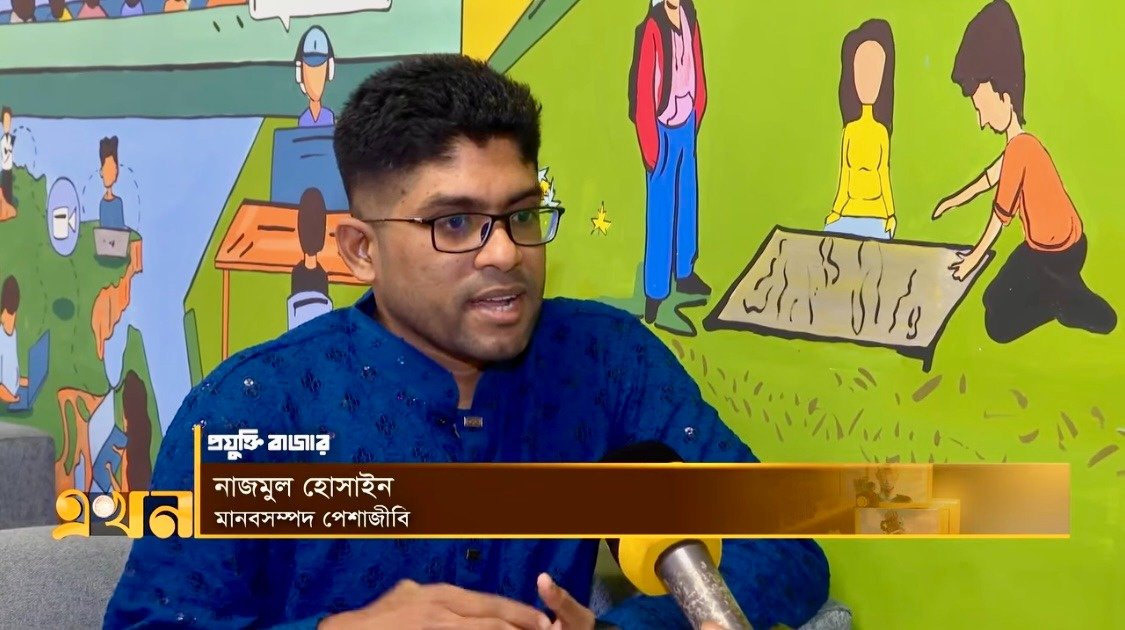
Nazmul Hossain on Mahdi&Mamun Podcast
Ideas we collected from Nazmul
Ownership is the root of all professional virtue. Nazmul argues that accountability, motivation and output quality are not traits to be trained in isolation; they are all downstream of one thing: whether an employee genuinely treats the organization as their own. Without ownership, every other skill becomes cosmetic.
The career vs. job distinction is the most neglected idea in Bangladesh’s professional culture. A job is a transaction. A career is a trajectory. Most young professionals sprint toward the nearest offer without ever mapping where they want to go and spend years course-correcting because they optimized for salary instead of direction.
Stillness is a competitive advantage. Nazmul draws on both Islamic philosophy (the concept of Nafs-e-Mutmainna — the tranquil soul) and professional reality to make the case that the ability to pause before reacting; to not compare, not panic, not jump at every new opportunity – is what separates professionals who compound from those who stay stuck.
Communication is not presentation, it’s responsibility. He reframes communication not as a soft skill about tone or eye contact, but as an act of professional accountability: keeping your manager informed, flagging problems before deadlines and giving people the context they need to trust you.
HR’s real mandate is unlocking human potential, not policing behavior. Nazmul identifies two broken archetypes in HR: the “awards and birthday” camp, and the surveillance camp. True HR, he argues, is about identifying gaps in people and closing them – making each person more productive, not managing optics or enforcing rules through fear.
Culture always flows downward, never upward. No policy, training program, or HR initiative can fix an organization from the bottom up. If the ownership class doesn’t embody the values they mandate, the entire structure is theater. Real culture change requires the top to go first.
Journey of Nazmul Hossain
Nazmul did not stumble into HR, he chose it with unusual clarity at an age when most students are still choosing between subjects.
While his peers at the public university were defaulting to Accounting or Finance because those were the “serious” options, he committed to Management specifically because it gave him a path into HR.
The goal was always people. Not systems, not assets — people.
He started his career the day after his thesis defense. No gap year, no waiting. The salary was modest by any standard, and more than a few of his classmates landed roles that paid significantly more.
He watched some of them take high-paying sales positions at IT companies for the package, only to spend the next two years unhappy in a domain they never wanted – unable to switch back without taking a significant pay cut.
He took a different bet: stay in his lane, compound slowly, and trust that depth would eventually outpace breadth.
The turning point came through training. Over years of working across organizations including Beximco and Ifat Group, he found himself in front of audiences – learning, as any trainer does, that you cannot teach what you don’t live.
He began to see the gap between professionals who spoke beautifully about management principles and those who actually practiced them.
Today, Nazmul holds that the most dangerous thing a young professional can do is treat their first few years as an audition for the company – performing for their boss rather than investing in their craft.
He believes the employee who takes ownership from day one, communicates before problems escalate and stays focused on output rather than optics is always the employee who grows – regardless of title, salary, or industry.
Frameworks, Tools & Books
Ikigai as Career Selection Tool: Used as a practical career mapping framework. Nazmul applies it through four questions: What am I good at? What do I love doing? What does the world (or market) need? What will I be paid for? Where those four overlap is where career selection should begin.
3P + 1C — First 30 Days Framework: When joining a new organization, Nazmul recommends mapping four elements before offering any opinions or making any changes:
- People — Who are the key players? Who influences decisions? Who does what?
- Place — What is the physical and organizational layout?
- Process — How does work actually flow here? What comes after what?
- Culture — What are the unwritten rules? What behavior is rewarded and what is quietly punished?
Until you have mapped all four, keep your observations private and your questions genuine.
Passion → Process → People (Business Growth Triangle): For any organization seeking sustainable growth, Nazmul argues three things must be present and sequenced correctly:
- Passion at the leadership level — without it, there is no vision worth executing
- Process — passion without structure becomes chaos
- People — the right humans to execute the process consistently
Nafs Levels (Spiritual-Professional Calm Framework): Nazmul references the Quranic model of the human soul’s levels — Nafs-e-Ammara (the restless, reactive self), Nafs-e-Lawwama (the self-correcting self), and Nafs-e-Mutmainna (the tranquil, composed self) — as a framework for why emotional stability is not weakness but the highest form of professional discipline.
Books Recommended:
- The 7 Habits of Highly Effective People — Stephen R. Covey
- Think and Grow Rich — Napoleon Hill
আমরা মানুষকে নিয়ে কথা বলি, কিন্তু মানুষের সাথে কথা বলি না।
Be teachable. You are not always right.

We invited Nazmul Hossain
…because he occupies a rare position: someone who has lived both sides of the employment relationship across multiple industries, trained over 15,000 professionals from factory floors to boardrooms and translated that experience into a clear, unapologetic philosophy of work.
At a time when Bangladesh’s young professional class is flooded with motivational content that overpromises and under-equips, Nazmul offers something harder to find – specificity, honesty and a refusal to dress up common sense as strategy.
He does not tell people what they want to hear. He tells them what they keep avoiding.